On a working truck, a sewer camera is not a gadget—it is how you justify excavation numbers on an invoice. This 2026 plumber guide is for techs who bill inspections: what to prioritize, a quick-glance shortlist, then four picks from pro ecosystem to small-head specialty.
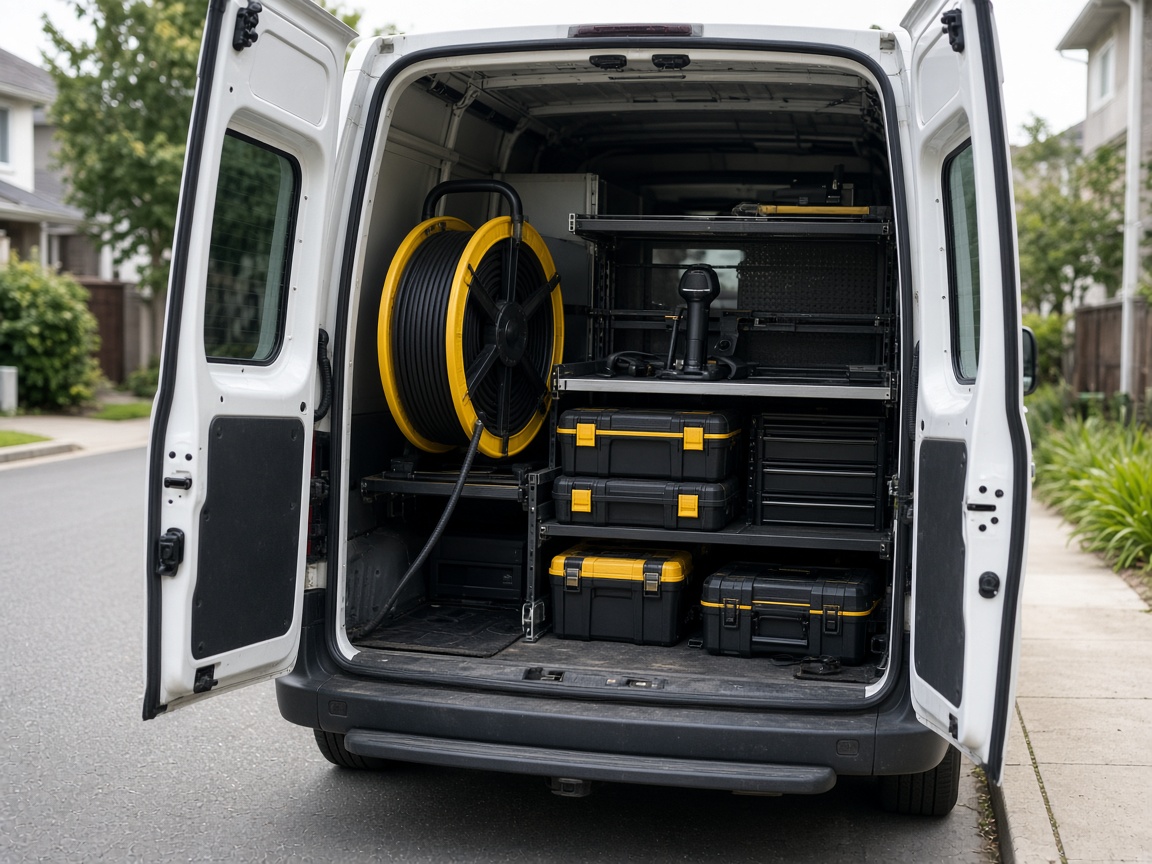
Personas we wrote for: solo residential plumbers, drain-cleaning independents, and small shops adding a second reel. Homeowners doing one DIY look should use the homeowner guide instead.
Quick-glance summary
Ratings are approximate community ranges across common listings—always check the live Amazon page. Price tiers are evergreen (Budget / Mid-range / Premium / Pro), not live checkout prices.
| Product | Best for | Price tier | Rating | Check price |
|---|---|---|---|---|
| RIDGID SeeSnake Class | Working plumbers who need dealer parts and bid recognition | Pro | Pro-dealer standard | Check price |
| Sanyipace 100 ft + Locator | Homeowners and solo techs who may dig | Mid-range | 4.0–4.2★ | Check price |
| Sanyipace 165 ft + Locator | Deep lots and trade jobs that outrun 100 ft | Mid-range | ~4.0–4.1★ | Check price |
| Anysun 17 mm Small-Head | Tight traps and small-diameter branches | Mid-range | ~4.0★ class | Check price |
How to choose a plumber sewer camera
- Rod durability first Soft cables that corkscrew in clay waste hours and reputation. Read recent reviews for push stiffness, not just “nice picture.”
- Self-leveling + recording Customers and insurers expect upright, dated evidence.
- Locator path you trust Built-in 512Hz sonde with a receiver that peaks, or a known SeekTech/NaviTrack-class upgrade path.
- Serviceability Replaceable heads and skids beat a slightly cheaper throwaway kit when Friday’s job is booked.
- Brand ecosystem vs cashflow SeeSnake-class wins on resale and parts desks. Amazon mid-tier wins when you need a working reel this week and will stock a spare head.
Top product picks for plumbers
The Best Professional Upgrade
RIDGID SeeSnake microDRAIN / Compact Class
Pros
- Dealer network (Ferguson, HD Pro, Grainger) and strong resale
- Recognized on municipal / insurance work
- Serviceable ecosystem instead of throwaway Amazon kits
- TruSense / HDR options improve hard lighting in pipes
Cons
- Expensive—monitors and reels are often separate line items
- Overkill for a one-time homeowner inspection
- Weight and learning curve vs all-in-one Amazon boxes
Why we picked it
When inspections are weekly income, the RIDGID SeeSnake ecosystem remains the default professional answer for a reason that has little to do with brochure megapixels: you can get parts, loaners, and resale. Ferguson, HD Pro, and Grainger desks exist. A three-year-old Compact/microDRAIN-class setup still carries real secondary-market value. Municipal and insurance work often recognizes the brand on reports.
The trade-off is structural, not subtle. Reels and monitors are frequently separate purchases. TruSense/APX features and CSx monitors cost real money. The system is heavier and less “open the box and go” than an Amazon all-in-one. Home Depot-style reviews of pro gear also remind you that monitors fail and out-of-warranty repairs hurt—you are paying for ecosystem, not immortality.
Buy this path if your shop already standardizes on SeeSnake monitors, if you bid work where brand signaling matters, or if you plan to sell the kit in a few years. Skip it as a homeowner impulse buy. Skip it as a brand-new solo tech with more month than money—unless financing through a distributor is part of the plan.
Price the system (reel + monitor + locator), not the tempting reel-only ASIN.
Ideal for: Pros billing inspections weekly who need parts tomorrow and brand signaling.
Skip if: You are a homeowner doing one lateral check.
Key specs translated to benefits
| Spec | What it means in the pipe |
|---|---|
| SeeSnake ecosystem | A failed head becomes a parts order—not a landfill trip—and used gear still holds value on the secondary market. |
| Dealer-backed locators | You can standardize fleet receivers and train apprentices on one workflow. |
The Best Overall
Sanyipace 100 ft Self-Leveling Sewer Camera with 512Hz Locator
Pros
- Self-leveling makes roots, cracks, and water lines readable on video you send to a plumber
- 100 ft covers most single-family laterals from a typical cleanout
- Matched locator kits exist so you can mark dig spots from the surface
- Recording + distance counter create shareable evidence for quotes and insurance
- Replacement heads/reels are more available than no-name generics
Cons
- Amazon listings vary—some “locator” ASINs include only a sonde, not the handheld receiver
- Monitor button layouts frustrate first-time users (playback controls are unintuitive)
- Plastic lens-protector set screws can loosen or fail in rough pipe—inspect before every push
- Heavier all-in-one boxes are awkward in crawlspaces
- Support is not a RIDGID-style US dealer network
Why we picked it
For daily residential work on a tighter CapEx budget, a Sanyipace 100 ft self-leveling + true locator kit is the Amazon configuration that most often matches what solo techs actually invoice: upright customer video, recording, distance context, and a dig-mark path.
This is also the pick we like as truck #2 behind a SeeSnake primary—Amazon speed and returns for the backup reel, dealer ecosystem for the money truck. Independent techs who cannot justify pro pricing yet still need to look competent on a phone upload will get more trust from self-leveled footage than from a rolling budget picture.
Field discipline matters more here than with RIDGID. Confirm the receiver is in the parts list. Peak-test every new wand above ground. Inspect plastic protector screws before pushing into rough clay—detached accessories in a customer line are how YouTube disasters and insurance claims start. Stock a spare head if this is revenue-critical.
Ideal for price-sensitive independents and secondary trucks. Skip if your procurement department only reimburses named pro brands.
Ideal for: Serious DIY homeowners, landlords, and solo techs who may dig or mark repairs.
Skip if: You only need a one-time look and will hire a pro scope anyway.
Key specs translated to benefits
| Spec | What it means in the pipe |
|---|---|
| Self-leveling ~23 mm head | “Up” stays up on screen, so you can tell whether a crack is at the crown or the invert—critical before you dig. |
| 100 ft push cable | Enough reach for most house-to-main laterals without paying for unused 165 ft of cable you will never push. |
| 512Hz sonde + receiver (on true kits) | You can walk the yard, find the peak, and paint a dig mark instead of guessing under concrete. |
| DVR / SD recording | You leave with a file you can email to three plumbers for competitive quotes. |
| Distance counter | “67 feet in” becomes a number on the quote—not a vague memory from the cleanout. |
The Best Long-Lateral Package
Sanyipace 165 ft Sewer Camera with 512Hz Locator
Pros
- Reach for long residential and light commercial laterals
- Often a more complete locator package than bare camera SKUs
- Better parts story than no-name generics
Cons
- Heavier and harder to manage at crawlspace cleanouts
- Overkill if your measured run never exceeds ~80–90 ft
Why we picked it
Buy 165 ft when your route book regularly outruns 100 ft—deep lots, long rural laterals, light commercial runs—not because the longer number looks tougher on a Facebook ad. Extra cable is extra mass at awkward cleanouts. If most of your stops die at 60–80 ft, a 100 ft kit is faster to live with.
Prefer thicker fiberglass options when the listing distinguishes cable diameter; community feedback often ties push success on long bends to rod stiffness more than to marketing “165 ft” claims. Still verify locator contents and self-leveling per ASIN.
Ideal for: Landlords and techs on long laterals who will mark digs.
Skip if: Your house run is short and a 100 ft kit already covers it.
Key specs translated to benefits
| Spec | What it means in the pipe |
|---|---|
| 165 ft + locator path | One kit for deep lots where 100 ft stops short—without jumping straight to full SeeSnake pricing. |
The Best Small-Head Pick
Anysun 100 ft Small-Head (~17 mm) Inspection Camera
Pros
- Clears smaller lines that stop a 23 mm camera
- Useful complement to a full-size lateral camera
Cons
- Less stable in large pipes without skids
- Locator / self-leveling often missing on cheaper SKUs
Why we picked it
A ~17 mm small-head camera is a specialty tool, not a main lateral reel. Keep one for traps, tight branches, and the jobs where a 23 mm nose simply will not pass. Pros who only own a full-size head eventually meet a line that laughs at them.
Do not let a small-head kit replace your self-leveling locator camera for standard 3–4–6" residential laterals. Stability and locating features are often weaker on the cheapest 17 mm SKUs. Think complement, not substitute.
Ideal for: Techs and DIYers with known small-diameter access problems.
Skip if: Your only job is a standard 4" residential lateral from a cleanout.
Key specs translated to benefits
| Spec | What it means in the pipe |
|---|---|
| ~17 mm head | Physical clearance into tight branches—not a megapixel brag. Size first, resolution second. |
Frequently asked questions
Should plumbers buy RIDGID instead of Amazon kits?
If you bill daily inspections and need resale/parts ecosystems, RIDGID (or another distributor brand) often wins. Amazon mid-tier kits work as backups, secondary trucks, or for price-sensitive independents who budget for spare heads.
Is VEVOR OK as a primary plumber camera?
As a secondary/backup reel for light residential, sometimes. As your only mark-and-dig camera, we prefer Sanyipace-class or true pro reels—cable stiffness and locator consistency show up in 1–3★ reviews for a reason.