Recurring backups, a mysterious wet patch in the yard, or a plumber quote that feels like a guess—those are the moments a sewer camera stops being a “nice tool” and becomes a decision tool. This 2026 homeowner guide is built as a buying funnel: who it is for, a quick-glance table, how to choose, then four named picks with honest trade-offs.
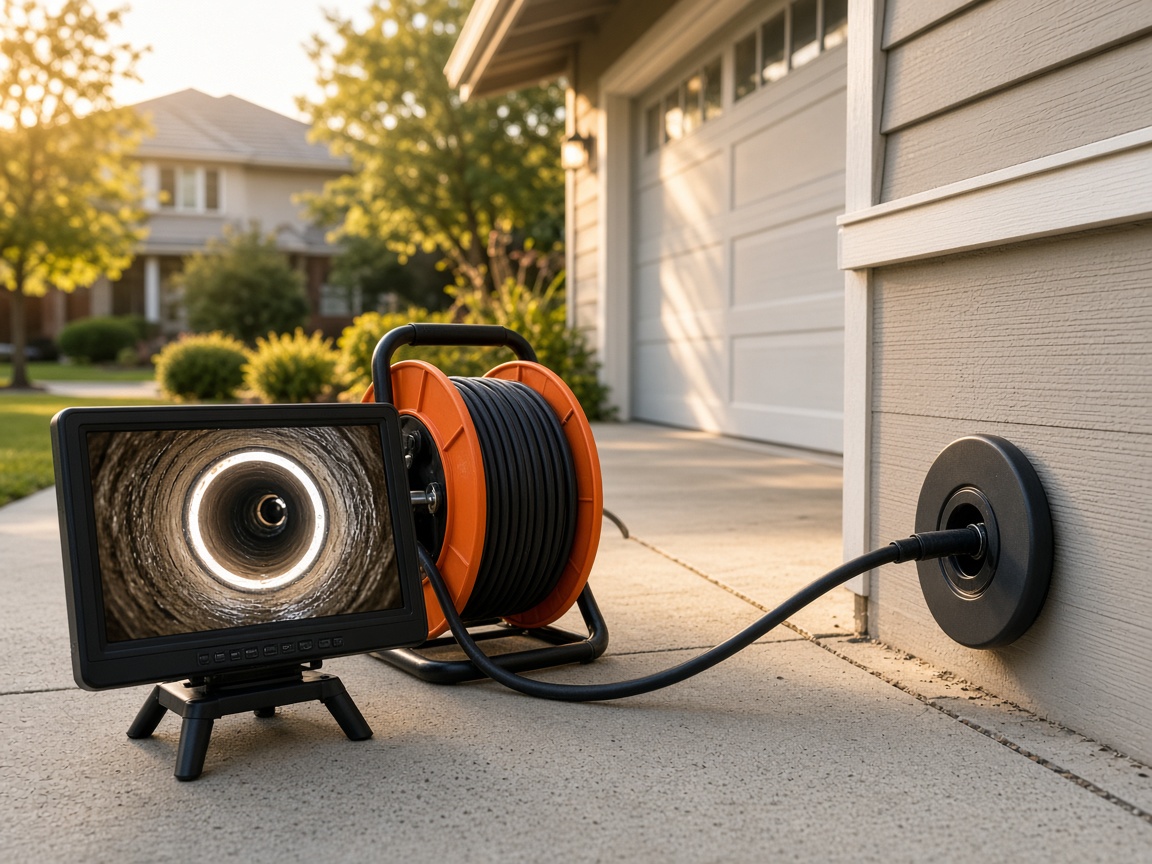
This guide is for DIY-capable homeowners, landlords, and small property managers who have (or can create) cleanout access and want video evidence before paying for excavation. It is not for active sewage emergencies, lender-mandated reports, or homes with no safe access—hire a pro for those (see buy vs hire).
Why these products matter: the wrong Amazon listing wastes money twice—once at checkout, and again when a 16-ft phone endoscope cannot reach the break. The right kit pays for itself when three plumbers quote from your footage instead of a blind guess.
Quick-glance summary
Ratings are approximate community ranges across common listings—always check the live Amazon page. Price tiers are evergreen (Budget / Mid-range / Premium / Pro), not live checkout prices.
| Product | Best for | Price tier | Rating | Check price |
|---|---|---|---|---|
| Sanyipace 100 ft + Locator | Homeowners and solo techs who may dig | Mid-range | 4.0–4.2★ | Check price |
| Sanyipace 100 ft Camera-Only | Video evidence first; locating later or hired | Mid-range | ~4.0★ | Check price |
| VEVOR 100 ft DVR Kit | Occasional residential diagnosis under a tight budget | Budget | ~3.5–4.0★ | Check price |
| DEPSTECH 50 ft | Indoor drains and short branch lines | Budget | ~4.3★+ | Check price |
How to choose a sewer camera (buying criteria)
Read this section before you click any product. Features decide whether footage is useful; brand names come second.
- Cable length that matches your lateral Most single-family homes need about 100 ft from a typical cleanout. Fifty feet is an indoor/branch tool. One hundred sixty-five feet helps deep lots—but adds weight. Measure or estimate before you buy. Primer: cable length guide.
- Self-leveling head Without it, the picture rolls as the head turns. You cannot reliably tell whether a crack is at 12 o’clock or 6 o’clock. For homeowner evidence video, self-leveling is not a luxury.
- Onboard DVR / SD recording If you cannot save a file, you cannot shop quotes. Prefer kits with a physical SD/TF slot over phone-app-only gadgets.
- Head diameter vs your pipe A ~23 mm head is the residential default; it can struggle in tight 2" PVC. Smaller ~17 mm heads clear tight traps but are less stable in large laterals. See head size guide.
- Locator honesty “Compatible with 512Hz” ≠ “receiver in the box.” If you will dig, confirm the handheld receiver is listed under What’s Included—or plan to hire locating.
- Skip phone endoscopes for laterals Sixteen-to-thirty-three-foot snakes are fine for traps and appliances. They are not house-lateral tools. Comparison: sewer camera vs phone endoscope.
Top product picks for homeowners
The Best Overall
Sanyipace 100 ft Self-Leveling Sewer Camera with 512Hz Locator
Pros
- Self-leveling makes roots, cracks, and water lines readable on video you send to a plumber
- 100 ft covers most single-family laterals from a typical cleanout
- Matched locator kits exist so you can mark dig spots from the surface
- Recording + distance counter create shareable evidence for quotes and insurance
- Replacement heads/reels are more available than no-name generics
Cons
- Amazon listings vary—some “locator” ASINs include only a sonde, not the handheld receiver
- Monitor button layouts frustrate first-time users (playback controls are unintuitive)
- Plastic lens-protector set screws can loosen or fail in rough pipe—inspect before every push
- Heavier all-in-one boxes are awkward in crawlspaces
- Support is not a RIDGID-style US dealer network
Why we picked it
If we could put only one homeowner kit in a cart, it would be a Sanyipace 100 ft self-leveling camera sold as a true 512Hz locator package. That combination solves the three problems that actually show up in real yards: Can I reach the defect? Can I tell what I’m looking at? Can I mark where to dig if the video says “replace this section”?
Self-leveling is the feature homeowners underestimate. Rolling footage looks dramatic on YouTube; it is useless when you are trying to explain a cracked clay joint to a spouse or a plumber over email. An upright image turns “something’s wrong down there” into “offset joint at roughly 48 feet, water line at the bottom, roots at the crown.” That sentence is what competitive quotes are built on.
One hundred feet is the sweet spot for most US single-family laterals. Plenty of listings push 165 ft as automatically better. Extra cable helps on deep lots and long rural runs, but on a typical suburban cleanout it mostly means more weight to carry through a basement hatch and more rod to fight when you retract. Buy the length your measured (or honestly estimated) run needs—then stop.
The locator half is where Amazon shoppers get burned. Community reviews and listing audits keep finding the same pattern: hero photos show a handheld wand, the parts list does not. A sonde in the head without a receiver is not a locator kit—it is a camera that could be located by someone who already owns a 512Hz wand. Before you buy, open What’s Included and look for the receiver by name. After it arrives, do an above-ground peak test in the driveway before the first muddy job. If the wand never peaks, start the return while the window is open.
Real-world sentiment on Sanyipace-class kits is generally positive on picture quality and the fact that replacement parts exist—unlike many no-name reels that become landfill when the head dies. The honest downsides from 1–3★ themes and field reports: quirky monitor button layouts, plastic lens-protector screws that can loosen in rough pipe, and occasional mismatch between advertised pipe clearance and a square-ish 23 mm nose in tight 2" PVC. None of those are reasons to skip the category; they are reasons to inspect fasteners before every push and to confirm head size against your cleanout path.
Choose this pick if you are the homeowner who might excavate a short section, mark a dig for a contractor, or simply wants one complete box instead of assembling camera + third-party locator from scratch. Skip it if a pro is already booked for a one-time scope and you will never touch a reel again—renting their inspection is cheaper than owning.
Ideal for: Serious DIY homeowners, landlords, and solo techs who may dig or mark repairs.
Skip if: You only need a one-time look and will hire a pro scope anyway.
Key specs translated to benefits
| Spec | What it means in the pipe |
|---|---|
| Self-leveling ~23 mm head | “Up” stays up on screen, so you can tell whether a crack is at the crown or the invert—critical before you dig. |
| 100 ft push cable | Enough reach for most house-to-main laterals without paying for unused 165 ft of cable you will never push. |
| 512Hz sonde + receiver (on true kits) | You can walk the yard, find the peak, and paint a dig mark instead of guessing under concrete. |
| DVR / SD recording | You leave with a file you can email to three plumbers for competitive quotes. |
| Distance counter | “67 feet in” becomes a number on the quote—not a vague memory from the cleanout. |
The Best Runner-Up / Value
Sanyipace 100 ft Self-Leveling Camera (Camera-Only / Sonde)
Pros
- Hits the three must-haves: reach, self-leveling, recording
- Lower spend than a full locator bundle
- Same brand upgrade path if you add a receiver later
- Stronger “real camera” feel than sub-$200 generics
Cons
- Without a receiver you cannot mark dig spots yourself
- Listing photos may show locators not in the box
- ~23 mm heads struggle in tight 2" PVC—check your pipe size
- Cable rewind on budget reels can feel clumsy at first
Why we picked it
The best runner-up for homeowners is the same core camera without paying for a receiver you may never use. Plenty of households only need diagnosis: Is it grease? Roots? A belly? A clean break? Once you know, you hire jetting or repair—and the excavator brings locating. In that persona, a matched locator is unused plastic in a case.
What you should not compromise on is self-leveling and recording. Camera-only Sanyipace configurations still hit the homeowner must-haves: ~100 ft of push cable, upright video, and an SD file you can forward. That is the difference between “I think it’s roots” and a 40-second clip that makes a plumber’s bid more honest.
This is also the smarter path if you are budget-stretching toward a better head and rod instead of a mediocre “with locator” bundle. Weak budget locators—ones that stay pegged at full bars or only beep when touching the head—create false confidence. Reviewers who leave 1–3★ ratings on bargain locator kits often sound the same: the camera was fine; the wand was theater. If you are not ready to day-one test and possibly return a locator, buy camera-only and hire locating later.
Watch the listing carefully. The same brand sells sonde-equipped heads and true receiver kits under similar titles. If the price looks too good next to locator bundles, you are probably looking at camera-only—which is fine, as long as you know that is what you are buying.
Ideal for landlords documenting recurring issues across units, or homeowners who want leverage on quotes but will not dig. Skip if you already scheduled a DIY dig this month and need a paint mark on the lawn.
Ideal for: Homeowners diagnosing laterals who will hire locating if excavation is needed.
Skip if: You already know you must mark digs yourself this month.
Key specs translated to benefits
| Spec | What it means in the pipe |
|---|---|
| Self-leveling without locator premium | You still get upright diagnosis video—the feature that separates useful kits from toys—without paying for a wand you may never use. |
| 100 ft + DVR | Enough pipe reach and a file you can forward when you call for jetting or repair quotes. |
The Best Budget Pick
VEVOR / Generic 100 ft Drain Camera with DVR
Pros
- Can reach a typical house lateral at a low price
- Amazon returns reduce DOA pain for one-time buyers
- Useful triage video before hiring jetting/repair
Cons
- Many units skip self-leveling—footage becomes hard to interpret
- Not a daily pro tool; heads/cables are often throwaway when they fail
- Easy to confuse with 16–33 ft phone endoscopes in search results
- No honest matched locator at this tier
Why we picked it
Under a hard budget ceiling, a VEVOR-class 100 ft DVR kit can still be a real lateral tool—if you filter like a skeptic. The budget tier is where Amazon search results mix legitimate reels with 16-ft phone endoscopes wearing “sewer camera” costumes. Your first filter is cable length. Your second is whether self-leveling is explicitly stated. Your third is whether recording is onboard, not locked in a flaky app.
What this pick is good at: triage. You push to the problem, spot grease vs roots vs a collapsed section, save a clip, and decide whether to call jetting or excavation. For a homeowner who would otherwise pay for a diagnostic scope every time the tub backs up, that can be rational math—especially with Amazon’s return window as insurance against DOA units.
What it is bad at: anything that assumes pro durability or included locating. Community complaints on thin/soft cables, missing self-leveling, and intermittent video are real. Treat the kit as a consumable diagnostic instrument, not a heirloom truck tool. If the head dies after two seasons of rental-property use, you are not surprised—you budgeted for that.
Do not buy a “locator” story at this price without a parts list that names a receiver. Honest matched locator kits usually live in the mid-range tier. Under a strict budget, camera + hired locate beats a fake wand.
Ideal for the occasional inspector who refuses endoscope bait. Skip if you need dig marks or daily commercial abuse.
Ideal for: Homeowners doing 1–2 inspections who refuse phone-snake listings.
Skip if: You need a locator or daily truck use.
Key specs translated to benefits
| Spec | What it means in the pipe |
|---|---|
| 100 ft + DVR at budget tier | You can still produce a clip for a plumber quote without phone-snake reach limits—if you filter out fake “sewer” endoscopes. |
The Best Short-Run / Indoor Pick
DEPSTECH 50 ft Triple-Lens Pipe Camera
Pros
- Simple setup and strong buyer familiarity on Amazon
- Fine for short indoor lines and learning push technique
- Far better than a 16 ft phone snake for 30–50 ft runs
Cons
- 50 ft will not cover many full house laterals to the main
- Not a substitute for a 100 ft self-leveling sewer camera
- No locator path
Why we picked it
The DEPSTECH-class 50 ft multi-lens pipe camera earns a slot because many “sewer” problems are not sewer laterals—they are indoor branches, kitchen lines, and short cleanout runs. High Amazon ratings here are often deserved for that job. The failure mode is buying it when the backup is ninety feet toward the city main.
Use this when you already know the run is short, or when you want a learning tool before committing to a full reel. It beats a 16-ft phone snake for mid-length indoor work. It does not replace a 100 ft self-leveling lateral camera, and it will not locate digs.
If your symptom is a yard wet spot, a toilet that gurgles when the washer drains, or a cleanout that historically ties a long clay run, skip this pick and start with the Best Overall or Best Value sections above.
Ideal for: DIYers inspecting indoor branches or short cleanout runs.
Skip if: Your problem is at the city tie-in / long lateral.
Key specs translated to benefits
| Spec | What it means in the pipe |
|---|---|
| 50 ft multi-lens head | You can inspect indoor branches and short cleanouts without buying a full lateral reel—just do not expect street-tie reach. |
Frequently asked questions
Can a homeowner use a sewer camera safely?
Yes for diagnosis through a proper cleanout, with caution. Do not force past collapses, treat wastewater as a biohazard, and hire a licensed plumber when the line is hazardous, inaccessible, or under a real-estate contract that requires a pro report.
Do I need a locator as a homeowner?
Only if you plan to dig or mark a repair spot yourself. Many homeowners record video and hire a plumber who locates. If you dig, buy a matched 512Hz kit—or hire locating.
Will a budget camera replace a plumber?
No. It helps you understand the problem and get better quotes. Repairs, jetting, and excavation still need pros when the defect is structural or access is unsafe.