Video tells you the pipe is broken. A locator tells the excavator where to dig. This 2026 guide is for homeowners and techs who need camera + 512Hz sonde + handheld receiver—not a marketing photo of a wand sold separately.
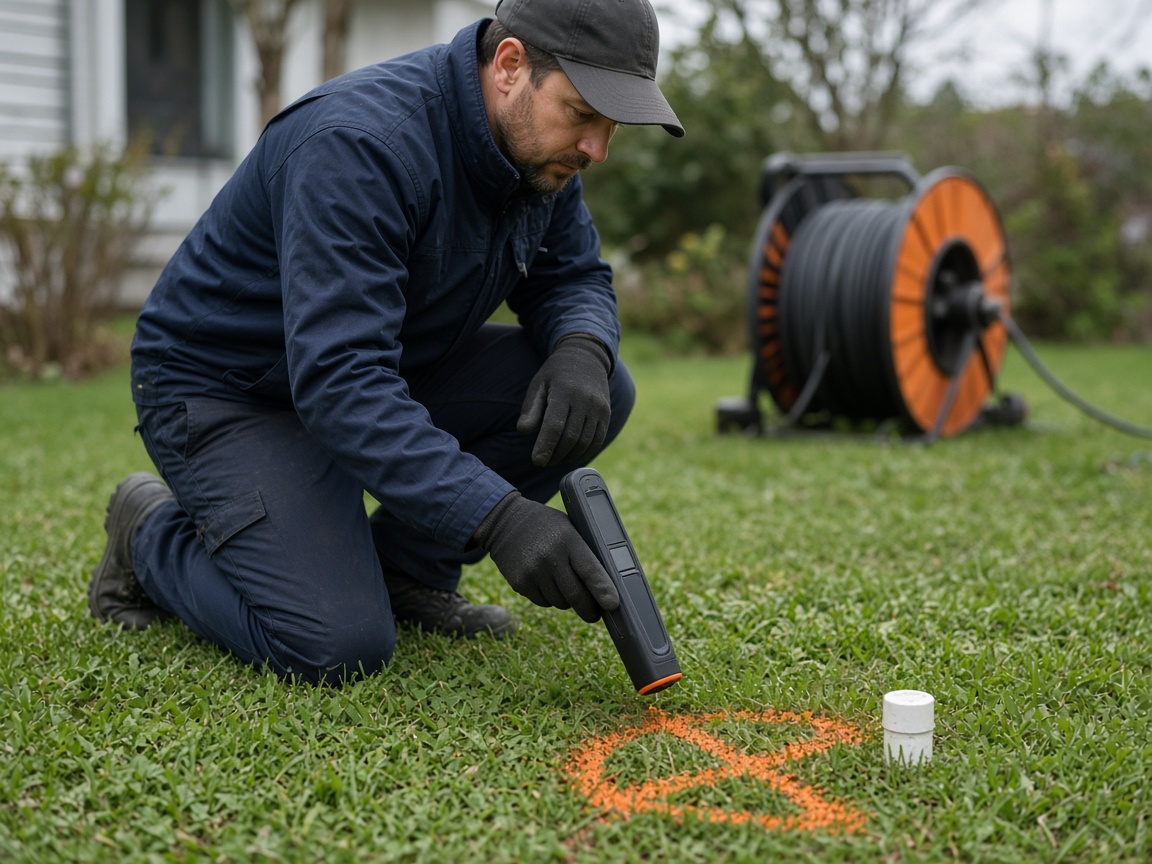
If you only need diagnosis and will hire locating, you may not need this guide—start with a camera-only kit in the homeowner guide. If you dig, quote digs, or mark digs, keep reading.
Quick-glance summary
Ratings are approximate community ranges across common listings—always check the live Amazon page. Price tiers are evergreen (Budget / Mid-range / Premium / Pro), not live checkout prices.
| Product | Best for | Price tier | Rating | Check price |
|---|---|---|---|---|
| Sanyipace 100 ft + Locator | Homeowners and solo techs who may dig | Mid-range | 4.0–4.2★ | Check price |
| VEVOR 165 ft + Locator | Long laterals on a tighter budget | Mid-range | 2.5–4.0★ (SKU-dependent) | Check price |
| Holdwells 100 ft + Locator | Cross-shopping mid-price locator bundles | Mid-range | ~4.0★ class | Check price |
| RIDGID SeeSnake Class | Working plumbers who need dealer parts and bid recognition | Pro | Pro-dealer standard | Check price |
How to choose a sewer camera with locator
- Both halves in the box Sonde in the head and receiver named in What’s Included.
- Self-leveling still required Locating a defect you cannot orient on screen is how you dig the wrong trench.
- Frequency match Most drain sondes are 512 Hz. Your receiver must support sonde mode at that frequency. Primer: 512Hz explained.
- Read 1–3★ locate reviews Search review text for “locator,” “sonde,” “peak,” “depth,” “bars.” Picture-quality five-stars can hide a dead wand.
- Day-one peak test Above ground, before mud. No peak → return.
- Cable you can actually push Long cable is useless if the rod folds at the second bend—common complaint on bargain 165 ft kits.
Top locator kit picks
The Best Overall
Sanyipace 100 ft Self-Leveling Sewer Camera with 512Hz Locator
Pros
- Self-leveling makes roots, cracks, and water lines readable on video you send to a plumber
- 100 ft covers most single-family laterals from a typical cleanout
- Matched locator kits exist so you can mark dig spots from the surface
- Recording + distance counter create shareable evidence for quotes and insurance
- Replacement heads/reels are more available than no-name generics
Cons
- Amazon listings vary—some “locator” ASINs include only a sonde, not the handheld receiver
- Monitor button layouts frustrate first-time users (playback controls are unintuitive)
- Plastic lens-protector set screws can loosen or fail in rough pipe—inspect before every push
- Heavier all-in-one boxes are awkward in crawlspaces
- Support is not a RIDGID-style US dealer network
Why we picked it
Our best overall locator kit for most digs is a Sanyipace 100 ft self-leveling camera with a receiver actually in the box. One hundred feet matches most residential excavation stories. Self-leveling keeps the defect readable. The matched 512Hz path means you are not guessing under the patio.
Why not automatically crown a 165 ft kit? Because many digs are not length-limited—they are interpretation-limited and locate-limited. A clear upright image at 55 ft with a sharp peak beats a soft rod fighting for 140 ft while the picture rolls.
Amazon still requires homework. Confirm the receiver line item. Confirm self-leveling. After delivery, enable the sonde, park the head on the driveway, and learn the null/peak pattern before you trust paint on a customer’s lawn. Community praise for Sanyipace often mentions usable video and the ability to buy replacement parts; community frustration usually tracks back to SKU confusion and fiddly UI—not the core idea of the kit.
Ideal for serious DIYers and solo techs. Skip if a distributor SeeSnake + SeekTech stack is already your shop standard.
Ideal for: Serious DIY homeowners, landlords, and solo techs who may dig or mark repairs.
Skip if: You only need a one-time look and will hire a pro scope anyway.
Key specs translated to benefits
| Spec | What it means in the pipe |
|---|---|
| Self-leveling ~23 mm head | “Up” stays up on screen, so you can tell whether a crack is at the crown or the invert—critical before you dig. |
| 100 ft push cable | Enough reach for most house-to-main laterals without paying for unused 165 ft of cable you will never push. |
| 512Hz sonde + receiver (on true kits) | You can walk the yard, find the peak, and paint a dig mark instead of guessing under concrete. |
| DVR / SD recording | You leave with a file you can email to three plumbers for competitive quotes. |
| Distance counter | “67 feet in” becomes a number on the quote—not a vague memory from the cleanout. |
The Best Long-Reach Value
VEVOR 165 ft Sewer Camera with 512Hz Locator
Pros
- 165 ft reach for deep lots when the cable actually pushes that far
- Often cheaper than Sanyipace for a receiver-included package
- Amazon returns make DOA / dead-locator risk manageable if you test immediately
- Newer self-leveling SKUs get praise for picture quality vs older fixed heads
Cons
- Many reviewers say the push rod is too soft for long, bendy residential runs
- Locator quality is inconsistent—some units never produce a usable peak
- Plastic protector screws and wheel skids can snag or fail in Wyes
- Manuals are often poorly translated; menus take trial and error
- Not a daily commercial primary tool
Why we picked it
VEVOR’s 165 ft locator packages are the usual “more cable, less money” alternative. When they work, contractors and homeowners who refuse SeeSnake pricing are genuinely happy with screen clarity and the idea of a receiver in the kit.
Read the low-star reviews with equal weight. Recurring themes: push rods too soft to use the full advertised length in multi-bend lines; locators that stay pegged or only detect the sonde on contact; faint distance marks; plastic protector hardware that fails; manuals that do not help. Those are not rare edge cases—they are the risk you accept at this value tier.
Our rule: buy VEVOR long-reach locator kits only if (1) the ASIN explicitly includes self-leveling, (2) the receiver is named in the parts list, and (3) you will peak-test and push-test within the return window. If any of those fail, return without sentimentality.
Ideal for occasional deep-lot work on a budget. Skip as a primary commercial mark-and-dig camera.
Ideal for: Budget digs on long laterals where you will verify self-leveling and test the locator immediately.
Skip if: You need daily commercial reliability and US parts desks.
Key specs translated to benefits
| Spec | What it means in the pipe |
|---|---|
| 165 ft cable | On paper, enough for long rural laterals—but only if rod stiffness lets you actually push past multiple bends. |
| 512Hz receiver in many kits | Potential dig marking without a second purchase—if your specific unit peaks correctly on day one. |
The Best Alternative Locator Kit
Holdwells 100 ft Self-Leveling + 512Hz Locator Kit
Pros
- Competes on the camera + locator shopping query
- Self-leveling + receiver is the right feature combo when listings are honest
Cons
- Brand support less proven than RIDGID
- Must day-one test the locator before the return window closes
Why we picked it
Holdwells-class 100 ft self-leveling + locator kits exist to be cross-shopped against Sanyipace when prices bounce. The buying rules do not change: receiver in the parts list, self-leveling stated, day-one peak test, inspect fasteners before the first rough clay push.
With fewer long-tenure reviews than the big Amazon names, lean harder on return policies and early testing. Feature-match on paper is not the same as a wand that peaks in wet soil.
Ideal for: Buyers who want a second Amazon option beside Sanyipace/VEVOR.
Skip if: You need a named pro ecosystem.
Key specs translated to benefits
| Spec | What it means in the pipe |
|---|---|
| Matched 100 ft + locator | Same job-to-be-done as Sanyipace locator kits—use price and recent locate reviews to decide. |
The Best Professional Upgrade
RIDGID SeeSnake microDRAIN / Compact Class
Pros
- Dealer network (Ferguson, HD Pro, Grainger) and strong resale
- Recognized on municipal / insurance work
- Serviceable ecosystem instead of throwaway Amazon kits
- TruSense / HDR options improve hard lighting in pipes
Cons
- Expensive—monitors and reels are often separate line items
- Overkill for a one-time homeowner inspection
- Weight and learning curve vs all-in-one Amazon boxes
Why we picked it
Pros often pair a SeeSnake reel (sonde in head) with a SeekTech / NaviTrack-class receiver purchased through a distributor. More money, better fleet standardization, better parts desks. Right answer for shops selling excavation weekly. Wrong answer for a one-time homeowner dig.
Remember reel-only listings: the monitor and locator may be separate line items. Price the workflow you will actually use on the truck.
Ideal for: Pros billing inspections weekly who need parts tomorrow and brand signaling.
Skip if: You are a homeowner doing one lateral check.
Key specs translated to benefits
| Spec | What it means in the pipe |
|---|---|
| SeeSnake ecosystem | A failed head becomes a parts order—not a landfill trip—and used gear still holds value on the secondary market. |
| Dealer-backed locators | You can standardize fleet receivers and train apprentices on one workflow. |
Frequently asked questions
Does every sewer camera include a locator?
No. Many cameras have a sonde in the head but sell the receiver separately. Read the included parts list. “Compatible with 512Hz” is not the same as “receiver in the box.”
Sanyipace or VEVOR for a locator kit?
Prefer Sanyipace when self-leveling consistency and parts availability matter. VEVOR can win on long-reach price—but 1–3★ reviews often cite soft cables and weak locators. Peak-test any kit on day one.